Château Beychevelle

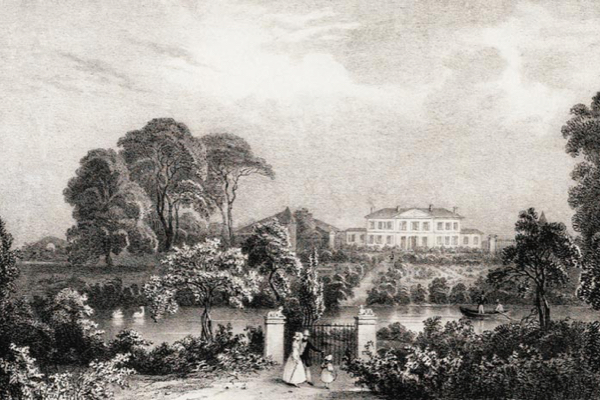
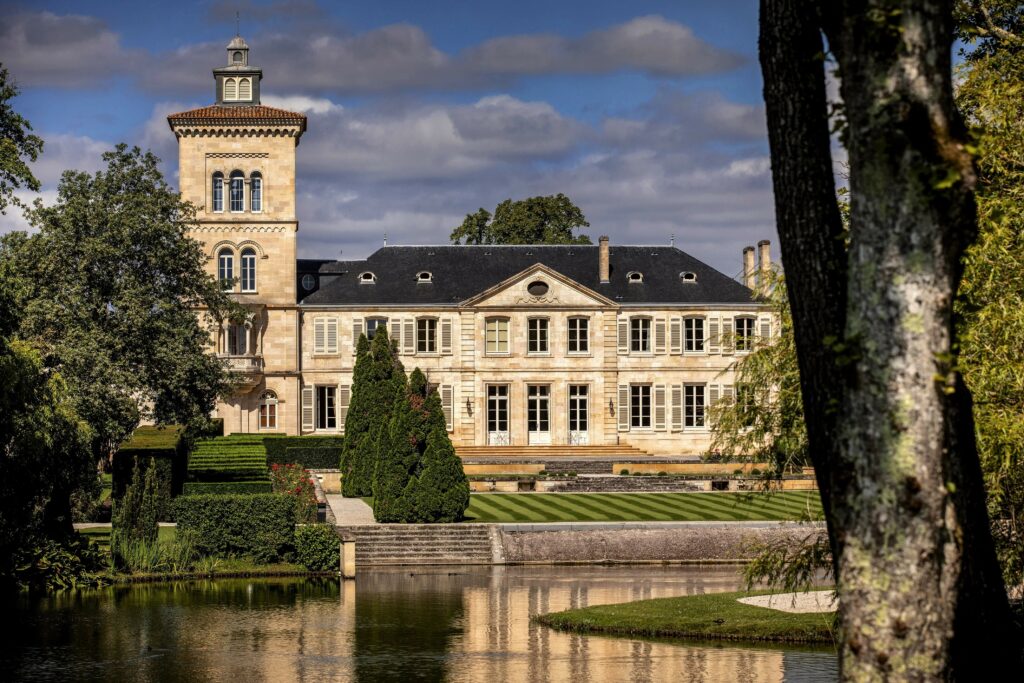
Château Beychevelle, whose identity has been shaped by three centuries of history, has always belonged to powerful families who successively left their marks on economic, political and cultural life in Bordeaux, and even outside of France.
Let’s meet Philippe Blanc
Château Beychevelle has 250 hectares of land, 90 hectares are planted with vines. These vines are an average of 30 years-old and are very densely planted. They have developed substantial root systems, enabling them to draw nutrients from deep in the soil. The vineyard is planted with the Médoc’s 4 traditional grape varieties: 56% Cabernet Sauvignon, 40% Merlot, 3% Petit Verdot and 1% Cabernet Franc. The proximity of the Gironde is vital for the production of our wines.

A land of wine and legends.

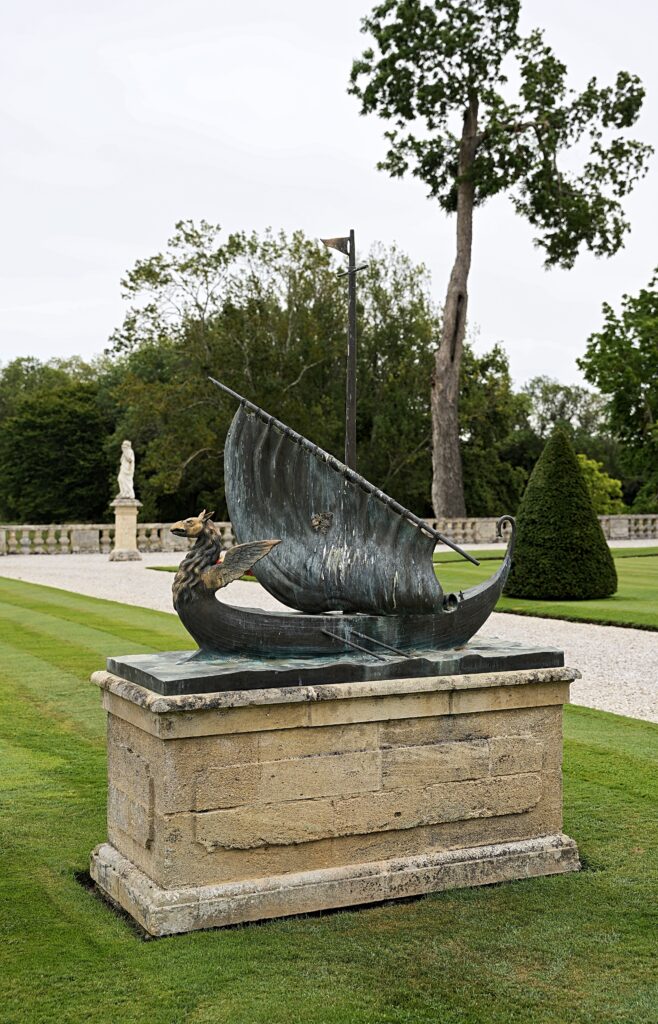
The legend of the first Duke of Epernon – owner of the Château at the beginning of the 17th century – is at the heart of Beychevelle’s identity. The reputation of this great French Admiral was such that as boats passed in front of his estate, they would lower their sails to show their allegiance. This deep mark of respect gave rise to the Château’s emblem : a ship with a griffon-shaped prow ; its nam in Gascon, Bêcha vêla, meaning « baisse voile » (lower the sails), later became « Beychevelle ».

Statue of the emblem in the garden of the Château.
Group 2

A glimpse in to the past

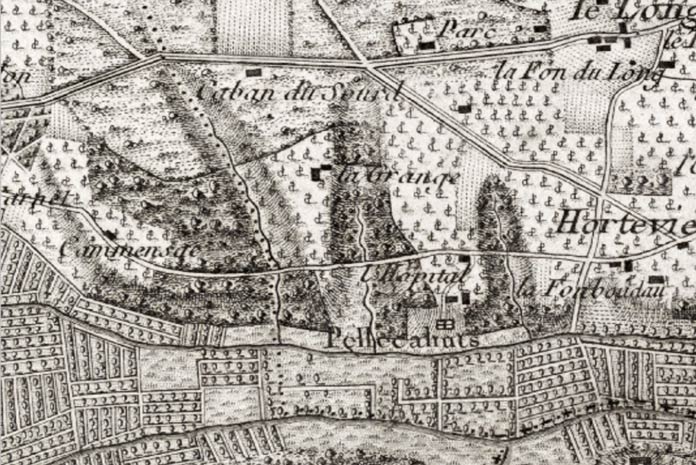
Back in the Middle Ages there were two separate entities: The first, the “Tenure of Pellecahus” was to the East of the brook running through the property. The other was located on a hillock to the west and was known as the “Noble House of Lagrange de Monteil”. These two estates were to join in the seventeenth century, and so Lagrange was born.
Château Lagrange belonged to the same family for almost two centuries, thus maintaining its unity. One of its more charismatic characters was a certain Charles de Branne de Cours, who managed the domain from 1712 to 1746. In the heart of the viticultural revolution, he and his rich Bordeaux family (who also owned Mouton) were to make Lagrange one of the most beautiful Médoc properties.
In 1787, Thomas Jefferson, then United States ambassador, ranked Lagrange as a Third Classified Growth. Jean-Baptiste d’Arbouet sold Lagrange to Jean-Valère Cabarrus, his wife’s nephew, in 1790. Jean-Valère Cabarrus was from a renowned wine merchant family and chose to develop the viticultural activity of the estate.
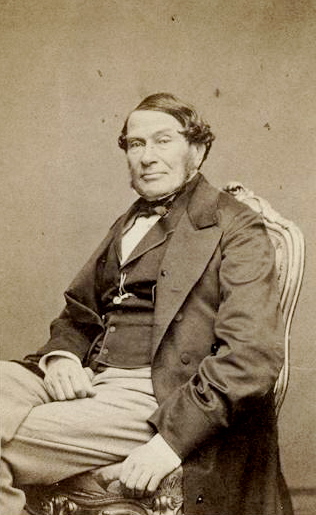
Lagrange’s heyday was between 1842 and 1875, when Count Duchâtel, Home Secretary to King Louis Philippe, was the owner. His visionary avant-garde approach meant Lagrange was awarded the rank of Third Classified Growth in the official 1855 classification.
Path
Path
Path
Path
17th century
1712 till 1746
1787
1855

Our goal is to achieve wine excellence

– Philippe Blanc
Group 2
Les Brulieres
Saint-Julien

Les Brulieres de Beychevelle

  • Fruity
  • Balanced
  • Structure
Brulières de Beychevelle’s 12 hectares of vines are 5 km from Beychevelle’s vineyard; being further from the Gironde estuary, they benefit from a cooler climate. Brulières’ blend consists of just two grape varieties: Cabernet Sauvignon and Merlot.Vinified and aged in a separate winery, it is produced with the same level of care as Château Beychevelle and Amiral de Beychevelle.
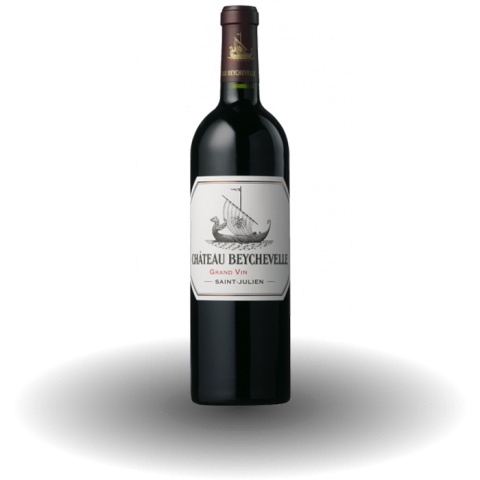
Beychevelle fles
Saint-Julien

Château Beychevelle

  • Complex
  • Structure
  • Elegance
  • Balance
Ever since it was first produced, and down through the various vintages, Château Beychevelle has reflected the elegance and finesse of Saint Julien’s finest terroirs.Graceful and complex, with a tremendous aromatic richness, Château Beychevelle is made from the best plots in the vineyard and undergoes a rigorous selection process.It reveals its character after about ten years, and can be kept for several decades, depending on the vintage.
Group 2
Les Brulieres
Saint-Julien

Les Brulieres de Beychevelle

  • Fruity
  • Balanced
  • Structure
Brulières de Beychevelle’s 12 hectares of vines are 5 km from Beychevelle’s vineyard; being further from the Gironde estuary, they benefit from a cooler climate. Brulières’ blend consists of just two grape varieties: Cabernet Sauvignon and Merlot.Vinified and aged in a separate winery, it is produced with the same level of care as Château Beychevelle and Amiral de Beychevelle.
Beychevelle fles
Saint-Julien

Château Beychevelle

  • Complex
  • Structure
  • Elegance
  • Balance
Ever since it was first produced, and down through the various vintages, Château Beychevelle has reflected the elegance and finesse of Saint Julien’s finest terroirs.Graceful and complex, with a tremendous aromatic richness, Château Beychevelle is made from the best plots in the vineyard and undergoes a rigorous selection process.It reveals its character after about ten years, and can be kept for several decades, depending on the vintage.

The future is now

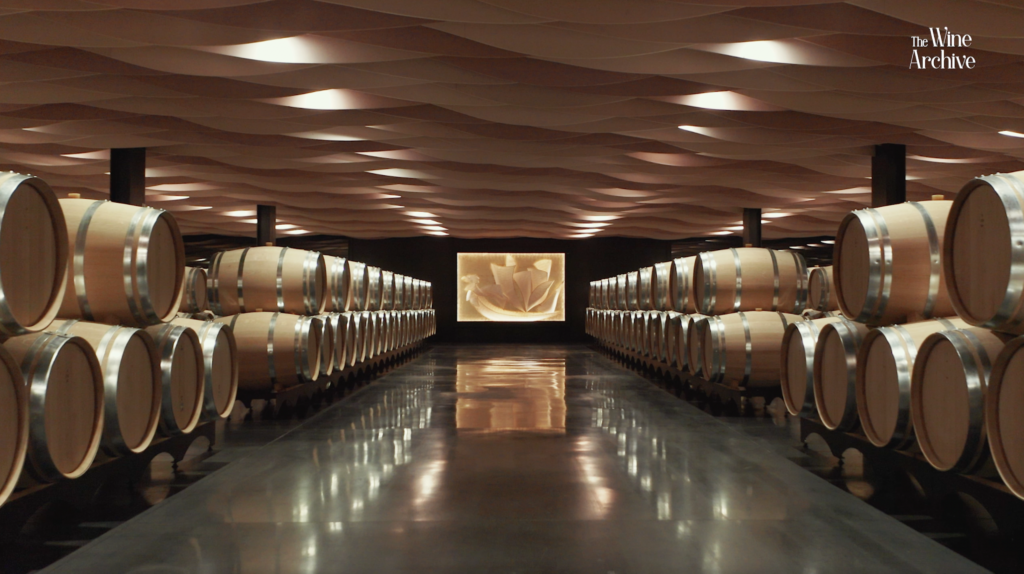
Château Beychevelle’s new winery has been custom-made to suit the vineyard, with every vine having a place in a plot-by-plot vinification process, that enables each terroir to express its full complexity and depth. More spacious, and with an improved layout, the new facilities also permit a gentle transfer of the grapes by gravity, very precise temperature control, and extractions adjusted to the characteristics of each vat.

Combining innovation and tradition, the winery is a perfect reflection of Château Beychevelle’s well known “haute-couture” expertise.

Château Beychevelle has always been careful to preserve its environment and its terroir. This commitment is given concrete form on a daily basis through our ISO 14001 certification and a sustainable agriculture approach, with part of the vineyard managed organically.

Château Beychevelle

Château Beychevelle, whose identity has been shaped by three centuries of history, has always belonged to powerful families who successively left their marks on economic, political and cultural life in Bordeaux, and even outside of France.

visit website

More videos
about Château Beychevelle

3 years ago
The new facilities at Château Beychevelle!
3 years ago
The new facilities at Château Beychevelle!
3 years ago
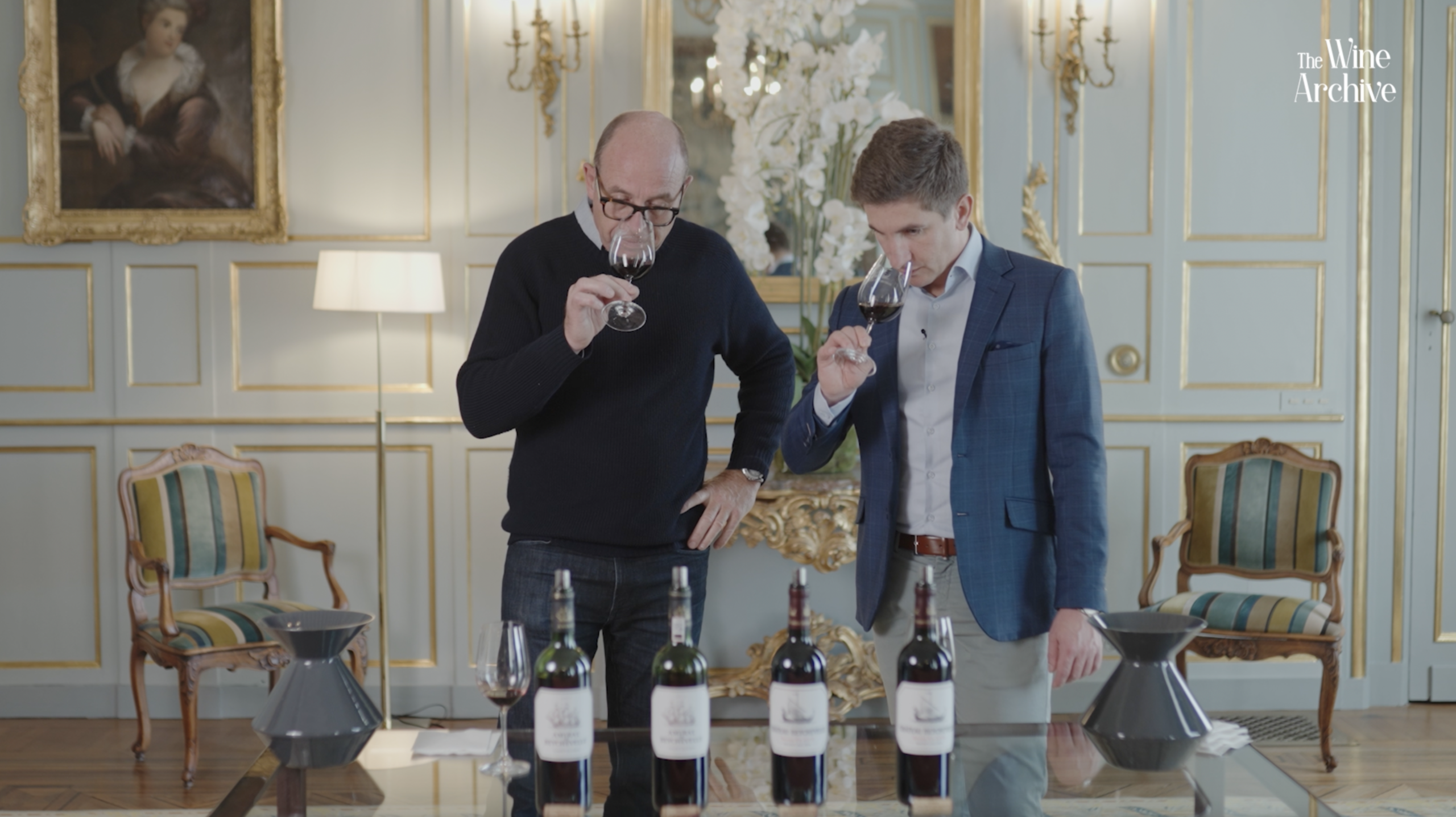
Tasting of Château Beychevelle and Amiral de Beychevelle
3 years ago
Tasting of Château Beychevelle and Amiral de Beychevelle
3 years ago
Amiral de Beychevelle 2011
3 years ago
Amiral de Beychevelle 2011